The flagship framework
改善の道
The Kaizen Way
Kaizen no Michi · The Path of Continuous Improvement
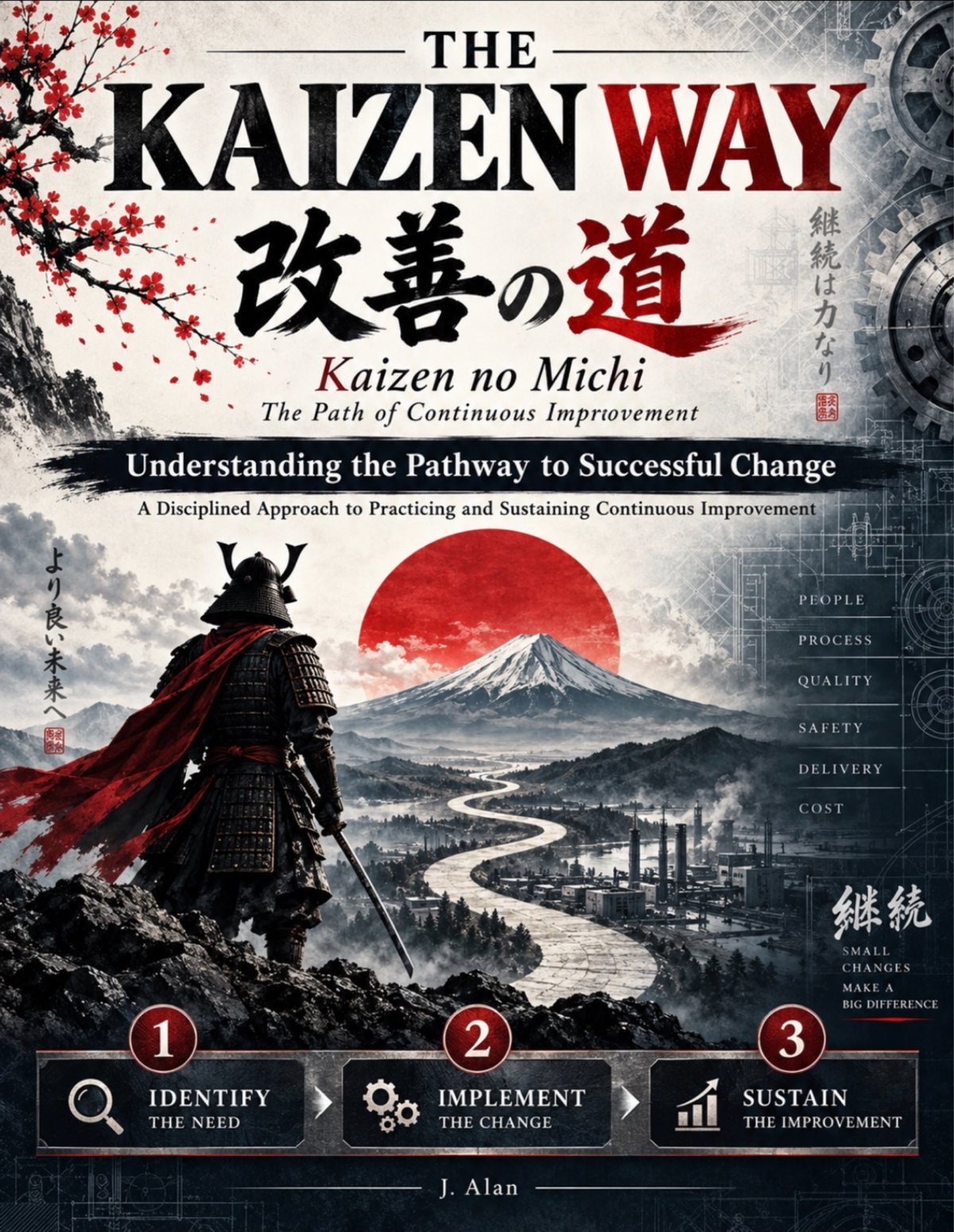
“We can Kaizen our Kaizen.”
Traditional Kaizen teaches continuous improvement. The Kaizen Way takes that philosophy further, with a disciplined, repeatable system that reveals:
- Where improvement breaks down
- Why it breaks down
- What must happen next
Even the methods we use to improve should be examined, challenged, refined, and improved. The goal is to turn continuous improvement from an inspiring philosophy into a practical, measurable, repeatable way of thinking and operating.
Seven phases. One continuous path.
- 1Awareness
Recognizing the need, opportunity, or responsibility for improvement.
- 2Diagnosis
Investigating symptoms, identifying weaknesses, and verifying underlying causes.
- 3Direction
Establishing clarity, priorities, alignment, and the path forward.
- 4Activation
Converting knowledge and intentions into deliberate, measurable action.
- 5Collaboration
Engaging people, strengthening cooperation, and building shared ownership.
- 6Results
Verifying outcomes and distinguishing meaningful progress from activity.
- 7Renewal
Sustaining improvements, preventing regression, and preparing for the next cycle.
The path is a cycle, not a checklist. Every improvement leads into further observation, learning, and refinement.
36 Ask37 Assess38 Align39 Apply40 Ascend
It diagnoses before it prescribes.
Rather than handing out generic solutions, The Kaizen Way finds exactly where a person’s or organization’s improvement process is breaking down, then guides them to the specific capability that needs attention.
- A 21-question foundational assessment, three questions for each phase
- Branching follow-up assessments that dig into areas of weakness
- A-principle worksheets that turn findings into specific action
- Reflection, implementation, and verification to confirm progress actually happened
- Recurring reassessment to set the next priority
Built for
- Organizational development and operational improvement
- Leadership development and accountability
- Onboarding, training, and workforce development
- Problem-solving and root-cause investigation
- Process improvement and standardization
- Individual growth and behavioral change
- Evaluating existing continuous improvement programs
Adaptable across industries, organization sizes, and individual needs.
The Kaizen Way includes an extensive written manual, numbered visual A-principles, diagnostic assessments, and structured worksheets. Bring it to your team through consulting, coaching, or a workshop.
Bring The Kaizen Way to your teamThe Kaizen Way | Kaizen no Michi is an original methodology created by J. Alan Mulholland. All rights reserved.
Let’s talk
Your people are worth more than OK training.
For your speaking and training needs, let’s connect. I bring a voice shaped by experience and messages built for action. The first conversation costs nothing. Let’s find what’s being missed and make it memorable.
Consulting · Coaching · Conferences
Here to serve,
J. Alan Mulholland
Timeless Truths. Applied Today.