J. Alan Mulholland seated at a desk, deep in thought, writing ideas in a notebook, under the words How I Think

How I think

I see what others miss.

Most problems don’t need more information. They need a different way of seeing the information you already have.

Between what people know and what they actually do, there is a gap. Closing that gap is how I think, and it’s what I do.

The way I approach every problem

Five habits of thought

  1. 01

    Ask before I answer.

    I ask questions and listen first. The real need may be training, clarity, standards, leadership, or execution.

  2. 02

    Look beyond the symptom.

    The problem people complain about is rarely the problem causing it. I trace it back to the root.

  3. 03

    Same message, different minds.

    Everyone hears through their own filters. I teach so the meaning lands, not just the words.

  4. 04

    Familiar doesn’t mean right.

    “Failing to practice correctly is to practice failing consistently.” I question habits, including my own.

  5. 05

    Lived before it’s taught.

    Seven years learning to walk again taught me how real change happens: one practiced correction at a time.

Examples

How I think through real situations

Common problems leaders face, and how my thinking changes the outcome.

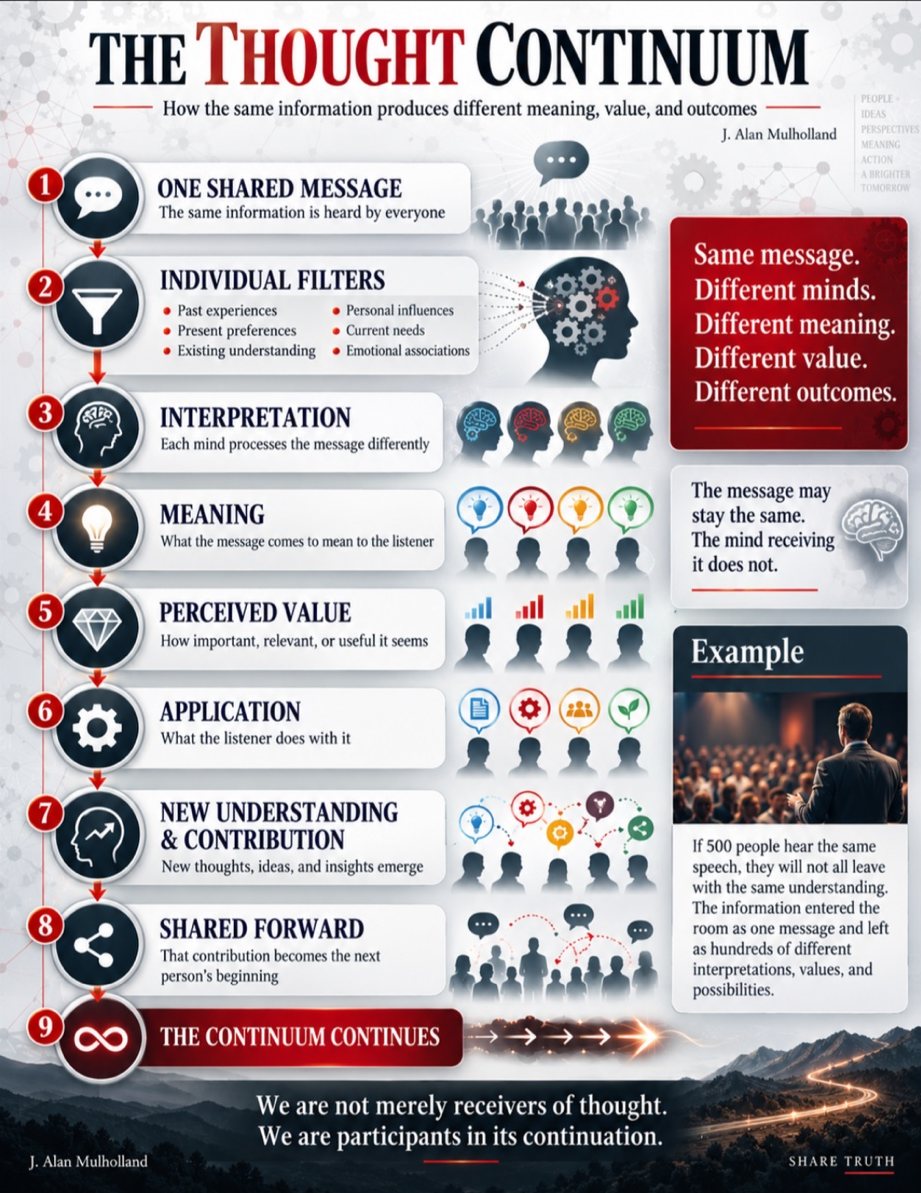
The Thought Continuum

“We already trained them on that.”

The usual response

Retrain everyone, louder and longer.

How I think

One message went out, but thirty different meanings walked away. I look at the filters each person heard it through, like experience, role, language, and fear, and rebuild the message so it lands.

What changes

One message, shared understanding, consistent action.
R.E.S.O.L.V.E.

“The same problem keeps coming back.”

The usual response

Patch it again and hope it holds.

How I think

A recurring problem is a symptom with a root. I go to the actual condition, study the man, machine, method, and material, and keep asking why until the evidence points to the real cause.

What changes

Fix it, standardize it, sustain it. The problem stops returning.

The Successor System

“Our best person is retiring next year.”

The usual response

Post the job and hope the replacement figures it out.

How I think

Don’t just replace a position. Reproduce understanding. Valuable knowledge lives in people, not manuals, so I help preserve it, transfer it, and practice it before it walks out the door.

What changes

The leadership void gets filled before it opens.

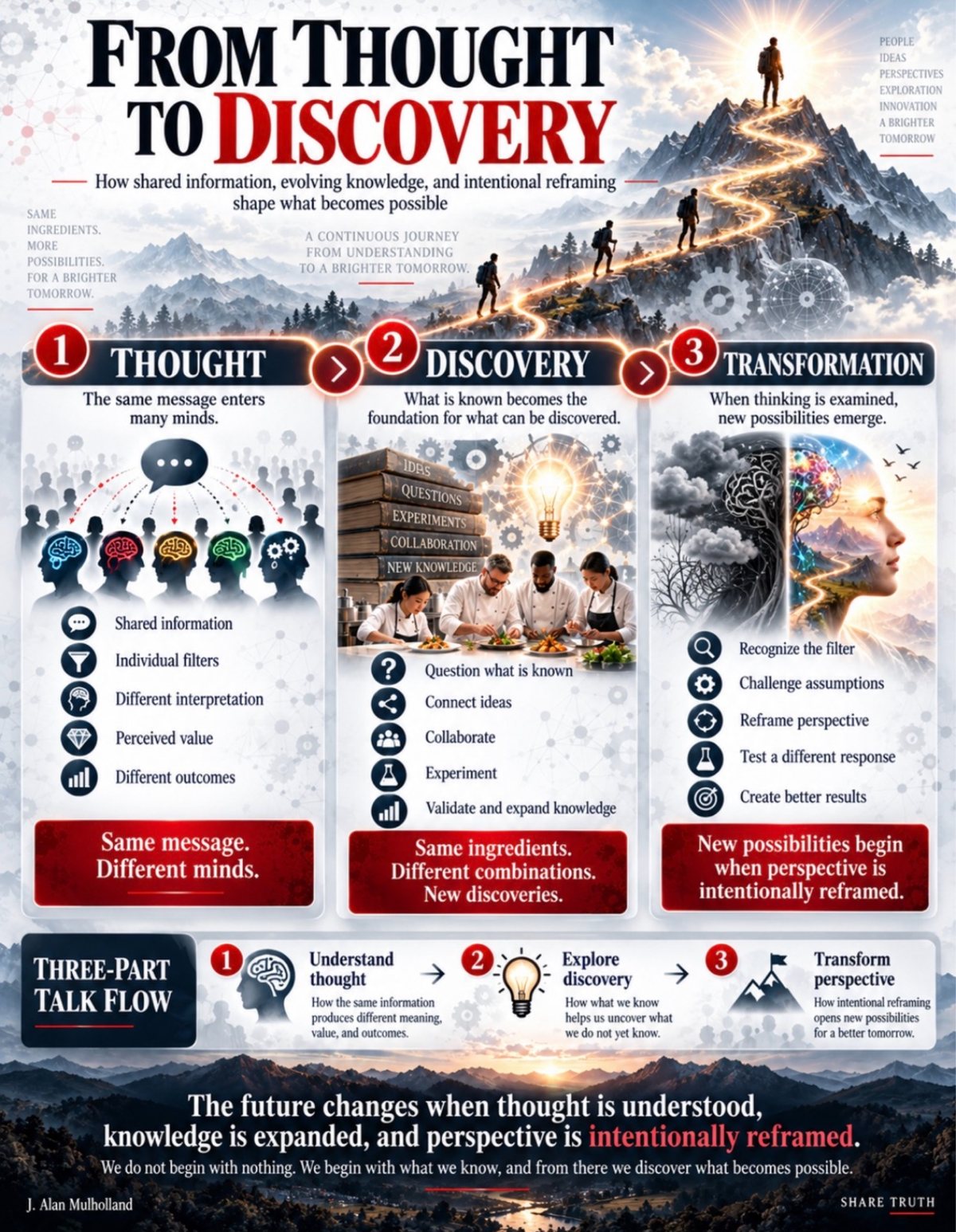
From Thought to Discovery

“We need fresh ideas.”

The usual response

Hire outside, start over, chase the new thing.

How I think

Same ingredients, different combinations. The answer is often already in your building: what the veteran knows plus what the new hire sees. I help reframe what you have into what you need.

What changes

Innovation that builds on your foundation instead of replacing it.

Worth over titles

“People won’t speak up.”

The usual response

Add another suggestion box.

How I think

Silence is often self-protection, not disengagement. A title can define responsibility, never worth. I help leaders build an environment where people feel safe enough to surface risks.

What changes

Problems surface early, while they’re still small.

The models behind my thinking

The Thought Continuum models

We are not merely receivers of thought. We are participants in its continuation.

The Thought Continuum infographic, nine steps from one shared message to the continuum continues

The Thought Continuum

How the same information produces different meaning, value, and outcomes.

  • One shared message
  • Individual filters
  • Interpretation and meaning
  • Perceived value and application
  • Shared forward: the continuum continues
From Thought to Discovery infographic with three stages: Thought, Discovery, Transformation

From Thought to Discovery

How shared information, evolving knowledge, and intentional reframing shape what becomes possible.

  • Thought: same message, different minds
  • Discovery: same ingredients, different combinations
  • Transformation: perspective intentionally reframed
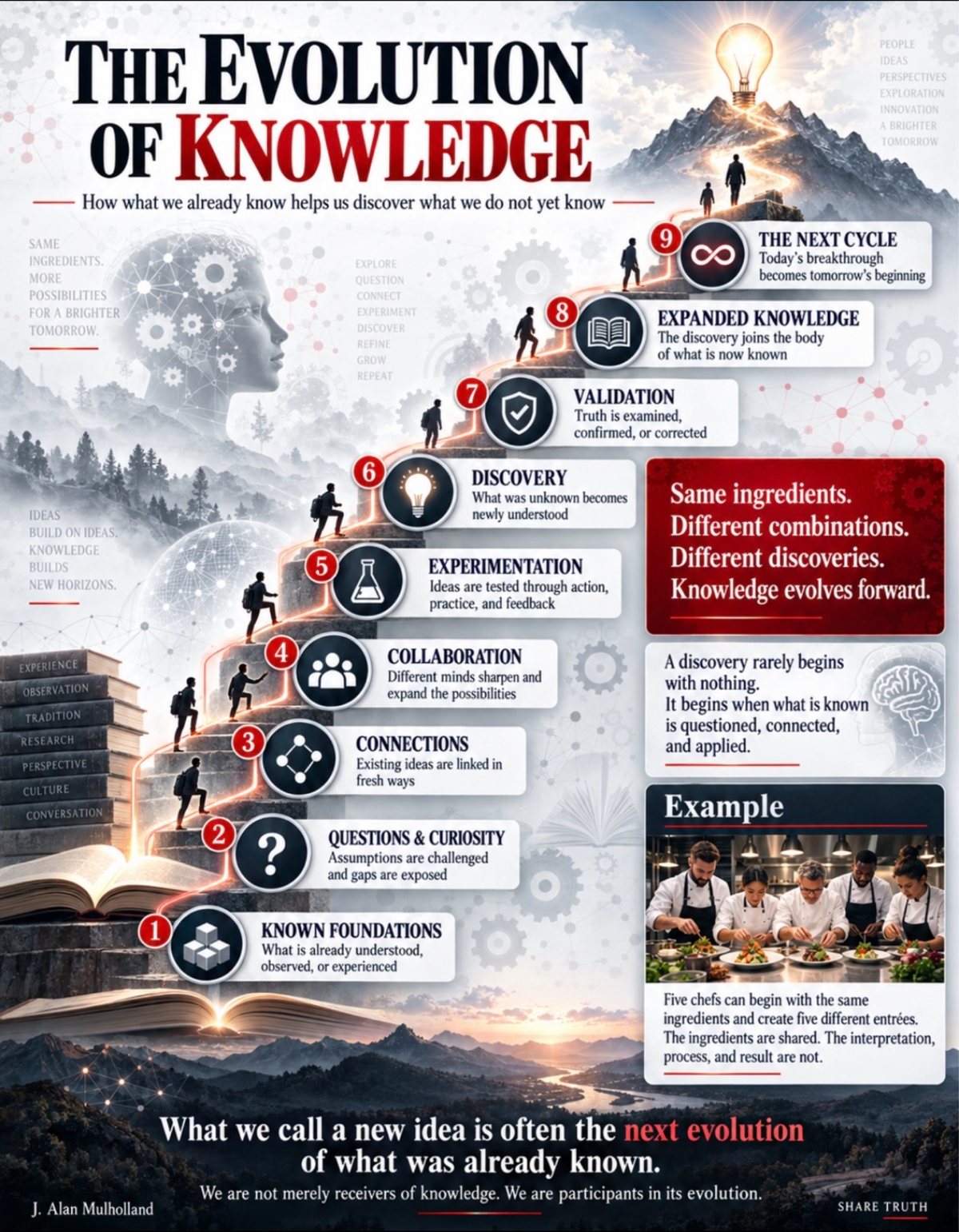
The Evolution of Knowledge infographic, nine steps climbing from known foundations to the next cycle

The Evolution of Knowledge

How what we already know helps us discover what we do not yet know.

  • Known foundations
  • Questions, connections, collaboration
  • Experimentation and discovery
  • Validation and expanded knowledge
  • The next cycle

“What we call a new idea is often the next evolution of what was already known.”

Use me as a resource

You don’t need a big project to start.
Sometimes one conversation is the missing link.

Bring me in when you’re stuck, when something isn’t adding up, or when you know your people can do more than they’re doing. I’ll bring questions, a fresh set of eyes, and dozens of frameworks built from situations I’ve lived firsthand.

  • Thinking partnerA focused conversation to see the problem clearly
  • AssessmentFind the real need before spending on the wrong fix
  • CoachingOne-on-one growth for leaders and successors
  • Workshop or keynoteHelp your whole team see what they’ve been missing

Let’s talk

Your people are worth more than OK training.

For your speaking and training needs, let’s connect. I bring a voice shaped by experience and messages built for action. The first conversation costs nothing. Let’s find what’s being missed and make it memorable.

Consulting · Coaching · Conferences

Here to serve,

J. Alan Mulholland

Timeless Truths. Applied Today.